Coca-Cola blog for worldwide employee survey at NevilleHobson.com:
I summarise Neville's blog but here is a little move towards relationship management: "A report yesterday in Dutch business magazine Brisk includes an interview with Orlando Ashford, head of HR at Coca-Cola's US headquarters in Atlanta, Georgia, who says that Coca-Cola can be one of the most respected companies in the world only when it's clear to employees what the company stands for. Ashford said this is necessary if Coca-Cola wants to remain as the world's best-known brand.
Brisk's report says that Coca-Cola's top 150 managers met last year and decided on the seven principles which describe Coca-Cola's culture. These seven principles make up the company's strategic Manifesto for Growth comprising Mission and Vision and Values.
Now we need to make these principles tangible. Take such a term as responsibility. What does it mean in practice? I would say: look not only to your own work, but consider how you can help Coca-Cola grow outside your own task description. Now it is up to the people of Coca-Cola to present their views.
The employee blog will be open for a week with one principle for discussion on each day - seven principles, seven days - and enables each employee anywhere in the world to participate.
Brisk's report says that the method of this employee survey (a blog) is not unique, citing IBM's experience early last year. Ashford says he wants to see Coca-Cola management everywhere in the world setting an example and participating in blogging: Leaders first, who are a main point for everything."
Friday, March 31, 2006


Who rules the world
 Earlier this year John Kaye offered an article in the Financial Times. I offer a summary here.
This takes me back to the issues faced by people in public relations in that it asks who the practitioner represents. Is it a nexus of relationships? If so which one? In the meantime the economists are facing the reality that a big chunk of the value is down to relationships:
"Today's executives do not derive their authority from the ownership of assets. Their authority comes from their position in a hierarchy and they acquire it in the same manner that priests, aristocrats and generals always acquired theirs: through family and personal connections, and their own political skills. Paradoxically, people who would angrily reject any suggestion that their thought is tinged with Marxism continue to use his categories. They talk of stockholders as business owners, although it is impossible to point to anything they own. They talk of profits as returns to capital, although they are really mostly economic rents – returns to brands, reputations, intellectual property, to corporate knowledge and organisation, and the exercise of market power. Modern equity markets are securities markets not capital markets. The gap between returns on equities and falling returns on bonds encouraged all companies whose assets are distinguishable from their business to enhance reported earnings per share by stripping the capital from the business. Property went first: retailers ceased to own their shops, brewers no longer owned their pubs. Innkeepers became distinct from hotel keepers and banks did sale and leaseback deals on those of their branches that had not been converted to restaurants. "
Picture: Nexus
The Digital Tsunami.
 In Public Relations, there is a numb minded and numb sculled refusal to acknowledge that digits are demanding attention and are dangerous too. They are demanding PR attention and are really dangerous. I began to explain this comment in a post to Richard Baileys' blog and continue here.
The member/employers/students of the CIPR, Companies and institutions and the PR teaching institutions will wake up one morning this year to find that everyday use of the Internet will mean dismissal of colleagues. It may be even worse, it may be you, or, worse still, everyone in your establishment.
It is now so clear, I can hear the roar.
No doubt the Universities and training agencies that run PR courses now have a lecture that says 'This is the most common reason for Ministers of the crown to get sacked'; 'This is the most common reason people don't trust on-line banking'; 'This is the most common reason for brand attack'....
The Big Digital Wave did for Jo Moore, switched off Barclays on-line banking for days and rubbished Kryptonite. All three were PR issues. They were just unlucky to be patting sand castles beside the digital waters and are among early casualties. So far, only a few have been affected. I mean a few hundred companies. A few tens of thousands of people. Some companies are surviving and some died.
There are three big PR online issues: Agency, Transparency and Porosity around which all other PR activity has to focus: analysis of the public sphere/culture, corporate culture, risk management; relationship planning, engagement in the long conversation and change.
Tax avoidance and the billion dollar deal
The Stamford Advocate reports that Diageo's under reported assets by 20% which avoided paying local taxes. This new broke as Diageo launched a $ billion securities note on the same day.
This is one of the most respected companies in the world apparently fiddling its taxes.
The above is true. Global news, global reporting, and a computer juxtaposed these two stories for me and I just reported what I saw. Its dangerous, it could cost jobs. The Digital Tsunami could make even a Big Beast shake to its foundations.
This is not the only story of this nature in this hour.
I have not seen a response in the publications that broke the story or online yet. I don't expect to. No one has responsibility for monitoring and evaluation news in near real time at Diageo.
So here we see Internet agency at work. People and machines re-purposing content. People can monitor the news across the globe, but companies don't. Why not? Here is the unmediated news about Weber Shandwick and here is the mediated news about the company. These two hyperlinks update all day and every day and can be made into a daily email alert or RSS feed. What you see now will be an update of waht I saw when I wrote this. Its automatic. You can summarise any web page and blog it automatically. You can have news delivered in summaries, and you can have it delivered so that you can mash it yourself. You can even get your own news as a podcast.
If I know this, so do other people and they grow in number every day. They are now part of a long conversation that organisations can only join. The companies can no longer dominate.
How un-gullible can the public get
Media coverage is (fortunately) not always taken at face value and now that the whole media relations process is available on-line and for anyone to use, it is now disintermediated. That is, the customer can access both to the content and the means for interpreting, changing and distributing the content without recourse to anyone. Both the media and the press office can be left out of the loop. But, many professional PR and media types ask: who bothers? And, you need to be an expert. Well anyone who is motivated to do so can do it. Or put another way, if you upset someone, they will learn fast.
The media and media relations are now laid bare. There is no longer mystery and magic. To be a publisher, get a blog. If you want to be a broadcaster get a copy of Audacity. If you want to create your own TV station use your cell phone. To create resources, build a wiki. Getting initial hands-on experience is not hard.
When we predicted this in the 90's, there was evidence of transparency in companies through web sites (e.g. publishing of prices online suddenly made competitive prices transparently available to all), we began to explian the consequences. The paper 'Blazing Netshine on the Value Chain' was far to far ahead of its time. Today, its too late.
Today, transparency shows the whole process. There is no longer a 'supply chain' there is access to all of its components.
With more moves to make companies transparent after a failure of corporate governance based on cultural, as opposed to legislative norms (according to this FT article), there will be more corporate transparency. Citizen conversations are becoming the norm. The travails at Volkswagen, the disastrous reshaping of Vivendi by Jean-Marie Messier, even the Parmalat and Ahold affairs: all came years after the arrival of national codes and in spite of a degree of corporate revision to satisfy the code's requirements. Now, there is to be EU directives. In this case it's the legislator getting there ahead of the blogger but only by a short head.
So transparency, both because all the tools are available to the public and because there is a legislative move for more of it is a big issue.
Leaking like a sieve
We know a lot about the private conversations between President Bush and Prime Minister Blair in the days leading up to the attack on Iraq. It seems you can't keep anything secret and so we find that the details of the inner workings of Nintendo's new console, the Revolution, have been leaked. Many people in Happy Valley-Goose Bay are troubled by a leaked memo from Canada's top general that recommends turning the Goose Bay air base into a civilian airport. Students say university administrators betrayed an unofficial alliance by sending the government a private memo proposing a major hike in tuition. The memo to the province was not meant for public consumption, but when student leaders were leaked a copy, the proposals left them aghast. ... Its easy to see how Internet porosity now makes confidential information available both to people with an immediate interest and people less affected. The leak is available round the world with damaging implications.
The Jo Moore email was not a one off. Porosity is with us all and the consequences include the sack and resignations.
The Big Digital Wave has already had a major effect but it has hardly begun.
The big deal now is how we work at analysis of the public sphere/culture, understand and optimise corporate culture, work through risk and opportunity management; develop techniques for relationship planning, engagement in the long conversation and change ourselves and our organisations.
Picture: Tsunami
Wednesday, March 29, 2006
When Strange Things Start to Happen
 People like me are a pain for Public Relations practitioners.
I argue and squabble about syntax.
To me Public Relations is about relationship management, an ancient social, political and organisational discipline.
I see all of PR practice as being either relationship management or one of the skills needed to be good at relationship management.
So when people talk about press relations or media relations, I see a skill for managing relationships with publishers and journalists. When I hear about reputation management I see a skill that attempts to manage the value of organisations. As practitioners develop skills for working in the un-mediated media such as the so called 'New Media' or in discourse, I see social skills at play to resolve the issues of relationships.
But the practitioners, the 'Corporate Affairs Manager' The Public Relations Manager', the 'Internal Affairs Manager' does not want me getting in the way of their work.
It's not 'PR'.
Anyway, these people have a life, have work, have a career and have their own distractions: 'This sudo-scientist is just playing and trying to play with my brain.'
Until... until strange things start to happen.
Until yesterday, I had thought that, but for minor tweaking, my interest in the evolution of the Internet as a social and cultural phenomena was pretty well a past chapter in my life. Rather like PR evaluation, corporate affairs, political organisation, it was useful experience to be built on.
Then in conversation, I discovered that I had been giving the same lecture for a long time and its implications were not having an effect on the audiences or, worse still, me. The chickens had come home to roost. What I was predicting, and have been predicting for over a decade, was here and now and having an effect on me and my colleagues.
What had happened was that a person had made transparent feelings about a tiresome chore. All of us knew this was an issue but just one of those things you have to do in life and.... well 'get on with it!'
The form of transparency through the use of the Internet.
There was a wide and, sometime heated online exchange.
It was a study in social communications, a sociologists' dream, a case study in communication, an exemplar in un-mediated communication. It offered a case study in transparency, porosity and Internet agency. It offered insights into the nature of social communication mediated in the dimension of the Internet.
Suddenly, all those lectures came home to roost.
The events of a few days raised issues of institutional culture, freedom of speech and expression, deficiencies in management, holes in training and knowledge, and need to change the product. It also offered wonderful new opportunities for personnel and product development and a whole new market. It brought realisation of how far and fast our society is changing because of the Internet.
At once, frightening and exciting.
It intruded on the comfortable. It got in the way of the job. It did that to my colleagues but it also had the same effect on me.
This stuck up prig, talking about relationships had not put the implications of theory into a practical setting.
The effect of the Internet on organisational relationships is profound.
It will 'get in the way'. It will get in the way of your job, your career, your speciality. It will change your organisation, it will change your product and services, it will change how your organisation trains and engages its people.
And, no, its not PR.
Its life: red in tooth and claw!
It will disturb, frighten, or even ruin organisations for the simple sin of naivety.
OK, so I predicted that the Internet was going to do such things but I did not, and have not said what it all means.
A sin of omission?
Worse that that.
All I ever was is a pain. Organisations thought 'The Internet is going to be important' so get him in give us a talk and then its done. I took the pieces of silver.
Lets get this straight – In the UK, and most Western countries, the Internet is now the catalyst for more internal and external change in organisations than any other activity.
Tuesday, March 28, 2006
Communication can be all fired up
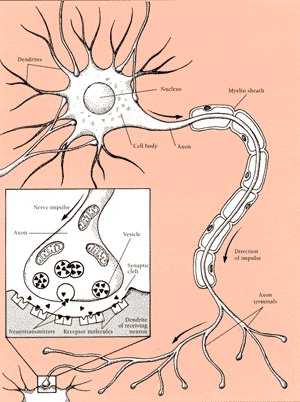 Getting closer to understanding what makes the very process of communication work is critical for the practice of Public Relations. We know that what we are actually doing is having an effect on the form of ‘virtual reality’ that we think is ‘reality.
We have to follow new developments in these other disciplines and no more so that in the burgeoning fields of neuroscience and psychology
We now know that part of our brain offers a ‘reward system’ and is fired up by a chemical called dopamine. When you smell, touch, hear, see, or taste a pleasurable stimulus, the dopamine neurons in your brain start firing in bursts.
So-called “burst firing” is how the brain signals reward and modulates goal-directed behaviour.
Scientists have found, for the first time, the brain area that acts as the gate, telling neurons either to go into communication mode or to stop communicating.
All the other parts of the brain that talk to the dopamine neurons can only do it when this area puts them into the communication mode.
We are now finding that these developments have huge significance for Public Relations.
What we are trying to find out is how Relationship with people and organisations can and do change the virtual realty in our minds.
The science is helping PR a lot.
Monday, March 27, 2006
Evaluate evaluate
 There is a very good case for re-visiting Consumer Discussion Monitoring and evaluation.
To begin with we need to find out where all this stuff is and we need to examine the range of processes that are available.
Is there a case for building a PR monitoring and evaluation wiki?
It is relatively easy to monitor Usenet. Netpinions® 2.0 is an automated monitoring bot covering 95,000+ consumer-generated media sites to monitor word-of-mouth in message boards, forums, discussion groups and Usenet news groups. The same company ( CyberAlert) also monitors the blogosphere with BlogSquirrel. Other vendors in this area include Technorati; PubSub; Bloglines and Blogpulse from Intelliseek plus Google's Blog Search.
Then there are the search engines:
Feedster
PubSub
Technorati
IceRocket
Gada.be
One would also use RSS feeds to monitor seraches and sites using tool like:
Lektora (we have almost fixed the Firefox 1.5 compatibility issue ... I have a Windows version available if you'd like to test it)
Bloglines
Trevor Cook has made his ‘Monitoring the Blogosphere’ PowerPoint presentation available for download.
The next problem is finding out exactly what the content is. It will include text and hyperlink references to sources.
Lets start with text…..
The text in every post does need a bit of sorting. Is the mention of your organisation ‘in passing’ or integral to the context? Is the content in context going to ‘move the needle? What are the implication of content for the wider culture in which the organisation has its being?
You can read all the posts but the numbers are huge. Alternatively you can use many of the natural language software developments to do the donkey work.
( even I have one of these).
It is helpful to have information to create maps that point to influential (and Onalytica is helpfully transparent about the methodology) sources. You can use the same data to identify the most significant concepts (e.g. what is the 'top news' of the day) which is helpful if you have a lot of posts to read.
John Wagner (On Message) has a post about monitoring blogs Use PR Sense when monitoring blogs. He pointed out, rightly, that not every comment merits a response. The monetisation of search is an interesting debate.
Benefits. The Washington Post had a front page article providing two examples of companies that have paid attention to customers' online comments and made good business decisions as a result.
And as soon as we have mastered all this there is The New Internet to worry about.
There is so much that it is now beyond blogging and it need the 'wisdom of crowds'
Picture: Monitor lizard
Sunday, March 26, 2006
Relationship deficit - creating poor productivity

There is a lot of gibberish talked about our 'employees are ourgreatest asset'.
If they are, where are they on the balance sheet? We see them in P&L as a cost but not on the balance sheet. So, the next time someone infers this ask them to show you where this information is in the company accounts.
We know what the cost of employment and employee churn is. Reed have released that information last October. Indeed, we also know that the trend is accelerating.
Reed gave us information about the cost of recruiting replacement and subsequent training costs and all the normal HR stuff. They do note that there is a relationship loss but do not go much further.
If we look at the culture of an organisation, we see it is made up from explicit concepts and the mutually understood values that people in a relationship with the organisation can and do share.
It is those concepts and the values that create, sustain and advance the organisation as it makes its way in the wider cultures in our societies. Some of the concepts are tangible. They are about products and services and they are about semantic and semiotic attributes. These assets are, of course, of little value unless they also represent recognisable tangible and intangible values. Other concepts are intangible, they include perceptions of value, support, reliability, reputation, trust and cultural acceptability.
These, concepts and their values are the real value of a company. They are its assets but they are as nought of the means for delivery of is absent. Delivery of these assets depends on internal and external relationships.
An organisation that has a high churn of staff is leaching relationship assets and it is reducing the value of all other tangible and intangible assets.
In high employment-churn economies, in an era of cheap, easily available capital, it is easy to start companies. Recruitment is easy even if retention is hard. But companies in this environment have difficulty sustaining relationships and do not exploit their asset value. When this is endemic, companies have difficulty extracting value from their 'big idea' product or service. The productivity gap grows; profitability eludes them and they go under. In the UK few companies survive for more than a decade.
An economy with a relationship deficit has poor productivity and underused tangible and intangible assets.
Such a deficit can be disguised by cheap capital for a while but in the long run, it is a recipe for economic ruin.
Is it time to put 'relationship assets' on the ballance sheet?
Graphic: From “http://www.reedconsulting.co.uk/assets/files/pdf/EMPATT.PDF”
Friday, March 24, 2006
Hay Market for Herrerasaurus

"As I sat opposite Hyde Park in the centre of London, I couldn’t help wondering if I’d slipped into the set of Jurassic Park, by some strange quirk of time." Said Charlotte Hanson after attending the Haymarket’s ‘PR and the Media’ conference at The Dorchester. It seems they are serving a very interesting niche market.
Picture: Natural History Museum
Stakeholder Analaysis and Mapping
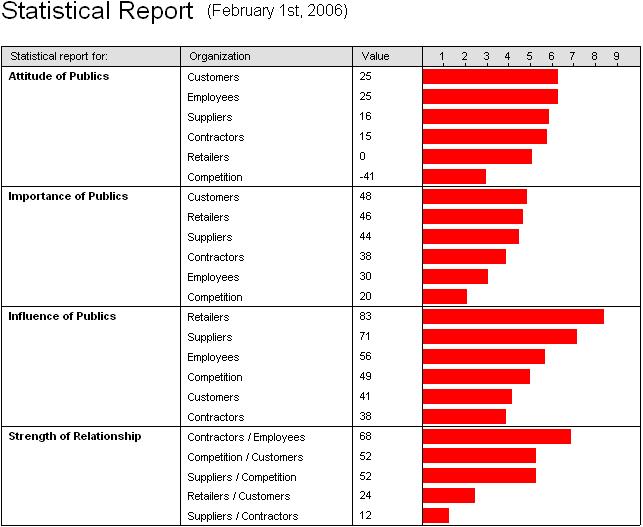 We hear a lot about stakeholders and what this means to people and corporations. With Peter Prowse and Dr Jon White, I do a lot of work in the area.
 The ability to identify stakeholders in a robust and replicable way and a capability to identify the most and least significant stakeholders is important and we have been doing this for over a decade.
Our problem now is that the idea of social segmentation requires a much more holistic approach our networked cultures.
I am not sure if this makes stakeholder mapping, social segmentation or definitions of publics obsolete but there is no doubt that a 'list' of 'stakeholders' is pretty useless.
One of the most interesting aspects of our work is that when you have a board of directors and ask them to name the most important, most influential and those social groups who like the organisation most to least, they have pet interests. As they compare a wider range of social groups/stakeholders they also change their views. The need for a robust process is important (we use a focus group and visualisation process).
When one asks about the stakeholders relevant to issues, the debate becomes even more interesting.
Most managers initially see a very narrow range of stakeholders relevant to an issue. But in a very short time, it grows and often what was seen as outside influences become internal management relations issues.
 The need to be able to harness a range of communications capabilities that assist in culture building is frequently seen as an important part of issues management.
As crisis hits, that 30 minute analysis of stakeholder is the most important 30 minute in the process but a good defence from crisis is good stakeholder analysis and management in the first place.
Incidently, we are also looking for additional internal and external consultants who want to use the Clarity Concept - it helps if you have an academic as well as consultant background.
Conferences worth going to
There are some really good New Media conferences for people to go to, and there are some that are less so and some that are just not worth the money as New Media conferences.
This one should be good

This one should be good
Speakers include:
Neville Hobson - Communications consultant, blogger and podcaster at nevillehobson.com
Guillaume du Gardier - Director Online Communications Europe, Edelman
Stormhoek Wines, the blogging vintners
Olivier Creiche, COO Europe for Six Apart
Martin Talks, CEO, Bluebarracuda.com
Julian Smith, analyst Jupiter Research
Antony Mayfield - Harvard PR
Lee Bryant - Headshift
Jeremy Phillips, director of Market Clusters
Gabe MacIntyre - Xolo.tv and Whisper Media
Nick Mailer - Positive Internet
Alex Bellinger - Audacious Online
Matthew Yeomans - Custom Communication
Mark Rogers - Market Sentinel
Vassil Mladjov, founder of Blogtronix
Heather Hopkins, director of research, Hitwise
Struan Robertson senior associate at Pinsent Masons
Graeme Foux - director and founder of Knexus
Genie Lutz - Partner, UK OnLine Presence and Tax Portal, PriceWaterhouseCoopers
Philippe Borremans - Public Relations Manager, IBM Belgium & Luxembourg
James Ledbetter, Senior Editor - Time Magazine
Peter Bale, Online Editorial Director, Times Online
Guillaume Champeau, Project Manager, AgoraVox.com
This one should be good too:
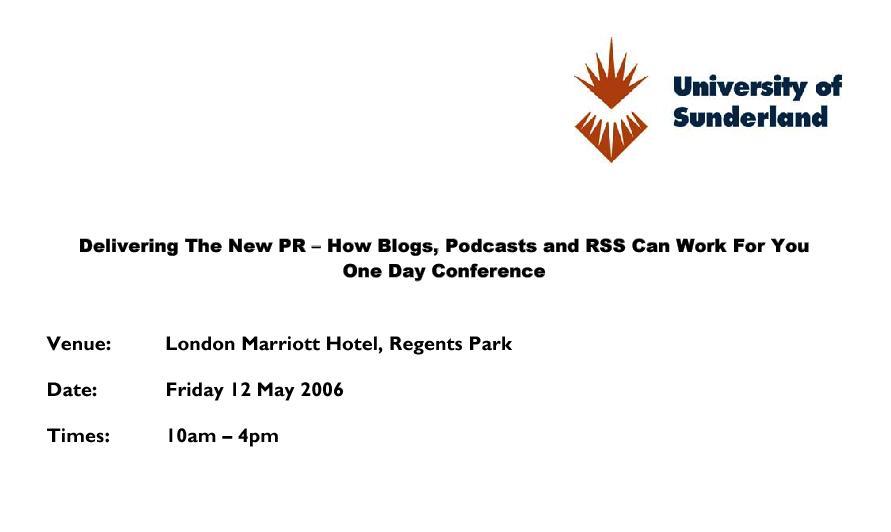
By contrast to some New Media conferences, this is a conference with speakers who know public relations (and marketing and advertsing); know the New Media; use New Media; have studied New Media and who are worth listening to:
Tom Murphy – Tom looks after PR and Community Affairs for Microsoft in Ireland, prior to this
Tom spent 14 years providing PR counsel to technology companies across Europe and North
America. He has worked in both agency and in-house roles with a range of companies including
BEA Systems, Gateway and Intel. Tom is the author of PR Opinions a
blog which covers the challenges facing PR and marketing professionals.
Elizabeth Albrycht – Elizabeth is an independent communications consultant and 15 year
veteran of high technology public relations practice. She has authored articles on blogging, RSS and
other new tools for PRSA's Tactics magazine, the IABC's CW Bulletin and the New
Communications Blogzine. Elizabeth blogs about PR and corporate communications at
CorporatePR and is the editor of Future Tense, a Corante blog that explores the future of work.
Neville Hobson, ABC - Neville is a communicator, blogger and podcaster and one of the
leading European early adopters and influencers in new-media communication for business. He
blogs daily at NevOn with commentary and opinion on business communication
and technology, and co-presents For Immediate Release: The Hobson & Holtz Report
a twice-weekly business podcast at the intersection of online communication, business and technology.
Philip Young - Philip is a Senior Lecturer in public relations and journalism at the University Of
Sunderland, specialising in media ethics. Prior to joining the university he ran a highly successful
PR agency and was an award-winning journalist with two major regional newspapers. Philip runs.the Mediations weblog and has written widely on new communications.
Chris Rushton - Chris is Head of Public Relations & Journalism at the University of Sunderland.
He is also chief examiner for the Chartered Institute of Public Relations' Advanced Certificate.
Prior to joining the university, Chris was managing director of a national PR agency, specializing in
corporate and financial PR. In addition, he has had a successful career in journalism, including seven
years as an award-winning editor of one of the UK's largest regional newspapers.
Stuart Bruce - Stuart is a founding partner of Bruce Marshall Associates, a PR consultancy based
in Leeds and London. Before starting his own business in 1998 he was responsible for UK public
relations and public affairs for Grant Thornton, one of the world's largest accountants.. Stuart has
blogged since early 2003.
Lets face it, the Internet is rapidly becomming the primary source for news for many people. Which puts New Media in the frame as well.
For more conference information click here
Thursday, March 23, 2006
A send-up from PRW's stable-mate
 I have just received a £500 pitch from Haymarket Events (a PR Week stable mate). The event is called: PR And New Media: Strategically Controlling Messages And Managing Risk In A 24/7 Digital Environment. That give-away word 'Controlling' say it all.
The speakers are predominantly from the traditional media! So they must know a lot about citzen journalism. There are no 'A list' PR bloggers probably because they blog and dissintermediate PRW.
The programme includes gems like this:
Exploring The Impact Of New Media Within A Traditional World: Blogs And Pods Take On Print And Radio
Why would blogs and pods want to take on print and radio? Blogs are blogs not newspapers and podcasts are podcasts not radio. A quicker answer is already out and about in the 'real world'.
Investigating The New Media Channels Employed By Journalists: A First-Hand Exploration Into Getting Your PR Message Out There... The programme proclaims. Do they suggest bloggers should aim their posts for journalists to interpret? What for? New Media goes straight to the audience. No need for journalists.
Multi-Channel Consumers When, Where, How... Are People Getting Their Information? This is by George R. Andrew, Head of Market Relations, Scottish Widows, that famous blogger who is using new media all over his web site, or not as the case may be.
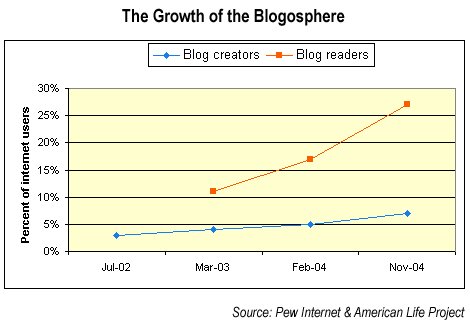
But the use of Nielsen-Netratings or ClickZ never crossed our minds.
Exploring Online Consumer Activity To Maximise PR Impact On Audiences Online
By Mark Brooks, Head of Media and PR, National Savings & Investments
Who is evidently pioneering interactive conversations and 'joined up' multi platform PR (Note the interactive, 'long conversation' at the web site. The find out what current experience looks like. Or there are real case studies available through new media (such as your iPod) here.
Who is evidently pioneering interactive conversations and 'joined up' multi platform PR (Note the interactive, 'long conversation' at the web site. The find out what current experience looks like. Or there are real case studies available through new media (such as your iPod) here.
Joe Blogging: Examining How To Counteract The Negative Influences Of Online Citizen Journalists On Reputation
 The Book is called Online Public Relations (look right). The methodology was invented by Alison Clark. There is even a complete online lecture to get people started.
There are case studies here.
Nick Hindle, Head of Corporate Affairs, McDonald's will talk about: Minimising Corporate Risk And Gaining Buy-In In The New Media Climate Through Tailored PR Strategies
I guess he will cover sites like these. Then there will be reference to these white papers and so much more.
Fighting Back: Managing Corporate Issues In A 24/7 World
Even the title of the session is the antitheses to new communication.
... and so the programme goes on.
A lot of scare mongering, a lot of people not of the New Communication age and this is the way to make money with old rope and even older journos.
Now, the real fun will be to see who goes to this event - how embarasing if someone recognised you!
Wednesday, March 22, 2006
Corporate Transparency
 Jeremy Pepper at his blog has taken up the issue of transparency.
 Of the five big issues that are important in online communications, transparency is the hardest. I have been preaching a mantra about the five big Internet issues for a number of years. They are:
Reach, speed, porosity and agency and Transparency. Transparency has an ethical dilemma's attached.
All organisations have information that they would rather keep confidential. For most it is about sustaining a competitive edge or a financial advantage.
I once has a CEO who used to drive marketing managers nuts because he would entertain competitors and was quite happy to take them through the drawing office and onto the test track.
His view was quite simple. It will take them a long time to replicate what I show than and by then we will have moved on. We learn what they are doing by their questions and so, they will always be second.
He did the same with customers. But this time he would ask if the benefits the company was designing into the product would solve their problems.
It meant that the design and development staff knew that they were not in competition with other suppliers but did have a a close and transparent exchange with customers.
It did make being a PR manager easy except for one thing. Every customer wanted to be included among the application studies we wrote to show how well they had understood the designed in advantages and how it made their businesses more competitive. It played havoc with the PR budget.
Today, one would see this exchange as part of the continuing conversation.
So how do we, ethically, draw the transparency line?
In looking at what needs not to be transparent in an organisation the rules should but the community first and commercial advantage second and competitive advantage third. But this does not mean that all organisations have to be, or should be completely transparent.
It is actually about culture. Organisations have cultures. This is a culture developed as people inside the organisation interact and talk about what they do. They talk about things that have an explicit description and implicit values.
This culture, when acceptable to the the wider culture militates for the organisation. Professor James E Grunig has been making this point since 1992.
If people can communicate inside an organisation, including in conversation with the 'dominant coalition' and can hold symmetrical conversations with external audiences, cultural convergence will be powerful. It will make the relationship value drive turnover and profits and, guess what, a mutual understanding of the line between secrecy and transparency will emerge.
Picture: Transparency
The Vacuous Practitioner and Intelligent Responses
 This is a rant about some of my colleagues. It is not about all of them some are quite beyond belief. It is also about some really good news.
 It is dissertation time in academia and I am beginning to see the drafts of research by students into various PR activities.
They are researching practice at the sharp end. They are talking to practitioners in major organisations. They are seeking examples of practice and best practice. They are talking to real PR practitioners and it's not pretty.
I have a view of an industry comprising bumbling old men and airheaded kids.
In a major research project into evaluation, there is one sentence from leaders in evaluation and no reference from in-house practitioners about new media.There is no reference about declining traditional media circulation.
These people think AVE's are wrong but are so weak (pathetic comes to mind) that they cannot convince marketing and other managers that AVE's are at best the lowest form of statistical garbage.
In campaign planning there is an almost total absence of robust research methods and very (I mean VERY) little by way of SMART objectives and strangulated strategy which is being confused with tactics.
In on-line PR, practitioners are still stuck on web site building, Spam and SEO and, can you believe it, 'seeding' Usenet. Blogs are mentioned and there is some excitement about them but podcasts and wiki's are not on the horizon and RSS, you understand, is about Really Stupid Spindoctors for all they know.
A major Bank is still printing a glossy tabloid in-house newsletters and shipping them round the world (every country in Europe, Most US States and umpteen destinations in Asia and Africa).
In identifying publics there seems to be a view that best practice is to brainstorm a list of 'stakeholders' and then pick the five that can attract the budgets or the CEO's attention. Its not as though there are not powerful aids available.
One weeps.
The counterpoint is Professor Jim Grunig's new paper in the latest editions of JOURNAL OF PUBLIC RELATIONS RESEARCH. Here is a real breath of fresh air and an answer to so many of the responses the students are bringing to me.
It is cheering stuff.
Entitled “Furnishing the Edifice: Ongoing Research on Public Relations As a Strategic Management Function, this paper follows from a paper I presented to Bledcom (www.bledcom.com) in 2003 in which I appealed for relationships to be included on the balance sheet. Jim has also come round to this view. He says:“I am continuing to work on the ROI of relationships as the chair of a task force of the Measurement Commission of the Institute for Public Relations, which is studying how nonfinancial indicators of value are influenced by public relations. This task force was initiated by the late Patrick Jackson —the renowned public relations professional. Non-financial indicators of value, or intangible assets, are a hot topic in management and accounting circles. I believe that relationships are the most important of these intangible assets and that if we can show that public relations creates value in addition to financial value, we can show the overall ROI of the function. The British public relations practitioner and scholar, David Phillips (2005), also studied the literature on intangible assets and argued that relationships are the most important of these assets. I believe this approach to ROI eventually will show the value of public relations and encourage public relations scholars to join in the study of intangible assets.”
Here is a powerful insight by an influential academic.
Hooray!!!!!
Picture: Sad Clown
Tuesday, March 21, 2006
BBC Newspod
 The BBC has started to promote BBC Radio Newspod which was first brought to our attention by Rob Fenwick
 This podcast service allows you to listen to programme highlights from across BBC Radio News, presented by Eddie Mair and available each weekday from 1700 GMT.
Here, again is further evidence of the significance of multi-touch, multichannel communications for Public Relations practitioners.
Podcasting lets you automatically receive the latest episode of your chosen programme as soon as it's available. You need to "subscribe" to receive a podcast, rather like you might subscribe to a magazine and get it delivered each week. An important difference is that all of the BBC's podcasts are free, and you can stop receiving the files at any time.
If you would like a company/subject specific round up of daily news at about 0800 each day, please let me know, it is a service that can be developed based on my news summary engine.
Sunday, March 19, 2006
The tipping point for Public Relations
 March 2006 was the tipping point for Online PR. PR' role is not as comfortable as some may believe.
 According to The Editor's Weblog The latest figures from the UK Audit Bureau of Circulation show that every British regional paper, both morning and evening, lost paying readers in the second half of 2005.
Reports that the The Newspaper Society, sees some light in the dark numbers and claims that "websites, niche magazines and broadcast platforms, ‘Lite’ editions for commuters, podcasts, mobile phones and e-editions are all allowing people to access news and entertainment on the move, and are proving increasingly popular for regional press consumers.
We saw this month that people in the UK spend more time on-line than watching television.
This tells us that the tipping point is here and now.
The content manager at Northcliffe Electronic Publishing, Robert Hardie, said, "Readers who were previously disenfranchised for geographical or logistical reasons from buying their local paper can now access it online, and both the age and social demographics are different for the online audience than they are for the traditional newspaper-buying one.”
Communications director of the Society, Lynne Anderson feels that "Measuring circulation alone clearly no longer gives an accurate picture of a regional centre’s reach . The challenge is to develop a national method of multi-media audience measurement which provides more meaningful figures for advertisers and agencies." This suggests that PR media planners and the PR Evaluationsist have a problem. Apparently evaluation reach numbers are now suspect! Circulation is not king. The engaged readers is more powerful and more committed. An engaged reader not going to believe a BuzzAgent? The person who is intruding and getting in the way of what 'I' want to find out'. In the networked community, this is a receipt for market oblivion.
The Big Gorilla announcement that News International is working hard at developing its on-line presence is really important. It says that on-line is now top priority for PR. According to The Economist, Murdock's News Corporation spent more than a billion dollars buying barely profitable internet companies. He did not do this for nothing.
“The debate is one of the side-effects of the digital revolution in which the dinosaurs must adapt or die. As one of the biggest beasts, ITV has already swallowed up a new competitor, the Friends Reunited website,” commented Jennifer Cunningham in the Herald noted this week.
The BBC which is no slouch when it comes to bridging the gap between traditional and on-line media, has signed up Dan Gillmore to explain the development of citizen media.
Georgina Harvey, managing director of Trinity Mirror's regional titles, said: "Trinity Mirror is rapidly becoming a multi-platform publisher.
This on-line presence must now open up new PR jobs to assist in influencing the changing face of PR with all these new communications channels opening up so fast. Press relations is no longer enough.
The future of Public Relations is no longer in print. In fact, it is no longer about narrow definitions of stakeholders or publics, such approaches need robust methodologies to succeed and PR has to work at a more profound level.
This new world is much more to do with social frames and understanding the nature of organisations. It needs these tools to help us use the language, content in context and appropriate communication channels. The 'long conversation (durring which the organisation may sell something) is now critical to relationship creation, building and management. The power curve militates against artificial WOM. People just don't believe plugs, spin, advertising and all the rest of the mantra you hear from the marketing and advertising industry based on OTS.
This brave new cultural world is a different form of PR. It includes the traditional techniques but to make them work needs not just and overlay of digital icing. PR practice now needs digital PR in the DNA of practice.
Hurry up! Hurry up! We don't have all minute.
Picture: Classic pics and art
Friday, March 17, 2006
Global PR Blog Week 2.0 » Blog Archive » Groupbytes: Digital/Social Rules for the post-Google Economy
Global PR Blog Week 2.0 » Blog Archive » Groupbytes: Digital/Social Rules for the post-Google Economy: "To understand the power and force of new media, it's important to appreciate what came before it. From our perspective, the most important driver and antecedent for new media is search, for this one technology alone has recruited many millions of people to go online for their many information needs. Granted, other technologies have helped to create the very large online population that exists today. But search is the dominant driver for the huge wave of recruitment we're calling 'the great migration.'
The second wave is where most of us - the PR bloggers reviewing this short paper - live. We're calling this 'the socialization of the Web.' In part, this socialization is a reaction, for one of the defining attributes of the first wave is that many people who have migrated to the Web for their many information needs have abandoned - willfully or inadvertently - offline communities. This has created both a crisis and opportunity for business and technology leaders. The groupbytes below are a distillation of the social rules that technology leaders have been importing or that have naturally arisen in a very large online experiment that's underway. Which leads to the controlling idea of this paper, and our wiki: technology and business leaders are now importing offline social rules into online environments. The winners will be those who best understand those rules, because the rules will influence all markets - online and offline. But how can we all get smarter?
Finally, we expect the lessons from the second wave to dramatically influence the third: the offline world's eventual adoption of lessons from the online world. This is already happening (the three waves are not exactly sequential), and it is one reason that the rules should matter to everyone, whether they are sold on the idea that they should have a new-me"
The second wave is where most of us - the PR bloggers reviewing this short paper - live. We're calling this 'the socialization of the Web.' In part, this socialization is a reaction, for one of the defining attributes of the first wave is that many people who have migrated to the Web for their many information needs have abandoned - willfully or inadvertently - offline communities. This has created both a crisis and opportunity for business and technology leaders. The groupbytes below are a distillation of the social rules that technology leaders have been importing or that have naturally arisen in a very large online experiment that's underway. Which leads to the controlling idea of this paper, and our wiki: technology and business leaders are now importing offline social rules into online environments. The winners will be those who best understand those rules, because the rules will influence all markets - online and offline. But how can we all get smarter?
Finally, we expect the lessons from the second wave to dramatically influence the third: the offline world's eventual adoption of lessons from the online world. This is already happening (the three waves are not exactly sequential), and it is one reason that the rules should matter to everyone, whether they are sold on the idea that they should have a new-me"
NEW PR JOBS FOR THE POST-BLOGGING ECONOMY
 The range of Public Relations consultants are now looking to areas of practice that lie beyond traditional press relations is growing. Much of this new thinking is fresh and exiting. Giovanni Rodriguez of Eastwikkers has offered some refreshing insights.
This kind of thinking needs wide exposure because it is about change in the PR industry.
I like this approach because it is about relationship managment and chimes with my relationship managment model.
I have summarised (OK, if you are in the USA 'summarized' - and I just love my summary tool) their blog post here:
NEW PR JOBS FOR THE POST-BLOGGING ECONOMY: "To make things simple, here are five new roles for PR people that have already emerged in our profession. For each role, we name an historical role model (or 'archetype,' for the Jungians out there), and contemporary role models (PR people who are already doing great stuff in the industry today).


Brave Cultral World
 We have rapidly moved from the information economy to the networked economy and, in my view are approaching the 'cultural economy'. It chimes with the view that 'capitalism is a finished chapter in world history' according to Arie de Geus, author of The Living Company, and former head of Shell's Group Planning Unit.
At the same time we see Antony Mayfield at Harvard Communications giving us a view of the “The authentic voice of the global media market, Rupert Murdoch hails the coming revolution that the Internet will bring.” Murdoch has shifted the goal and talks about 'all... on a journey'. He has moved away from the corporate to the cultural in one leap. And, according to The Economist, his News Corporation spent more than a billion dollars buying barely profitable internet companies.
He said: "It is a creative, destructive technology that is still in its infancy, yet breaking and remaking everything in its path. We are all on a journey, not just the privileged few, and technology will take us to a destination that is defined by the limits of our creativity, our confidence and our courage."
It chimes with the view that 'capitalism is finished chapter in world history' offered by Arie de Geus, author of The Living Company, and former head of Shell's Group Planning unit.
Gitte Larsen review of the Geus thesis summarised here:
“When the capital market became a buyer’s market in the late 1990s, there came an economic price, a world price of capital, and why should we keep on running companies to maximize shareholder value? Today, you should run a company to maximize the value that is returned to the people that are a part of the company. The reason that doesn’t happen yet is that you have an internal reality in the company that says results are entirely the result of human talent, while at the same time you have an external reality that says you must continue to see capital as the dominant production factor.
“A hundred years ago, a company was based mainly on capital; the human element was a minor element. The most important was capital assets. That’s absolutely untrue today, because the human talent you have in the company defines your success, with other assets playing a lesser role. Just look at how many assets Microsoft has, for example. Its capital assets are minimal compared with its market value. The difference between market value and the balance sheet is the value of the human ‘community’ in the company. That’s completely ignored in the language of today. And that’s the tension or great challenge for companies today. We have to change the way we talk about companies. Business is about people working together to produce economic material wealth and quality design. Denmark has beautiful examples of how good ideas and good design quality are essential – for example, Lego and B&O. Their success is based on the quality of the people that work there, not the quality of their machines.
“The Living Company doesn’t have employees or abilities. The company has members, and these members have a set of shared values. And this is certainly the “mysterious thing” about Toyota. Toyota has a strong ‘corporate culture’; if you are a member of Toyota, you share the values of that culture. That’s just one aspect of the Living Company, but it’s a very central and important one,” says de Geus. “There are examples of companies that have survived a long time – Shell, for example, is more than 100 years old – and these successful old companies have a strong culture. They have a set of values that the people in them share. That’s the biggest difference between a living company and how we usually define a company; that is, according to legal and economic definitions. The living company is a community of people from the start.”
Here is an mp3 of the Arie de Geus interview at the Busieness Innovation conference in Copenhagen this week.
Picture: City of Bradford
Subscribe to:
Posts (Atom)